PPR Pipes and Fusion Fittings
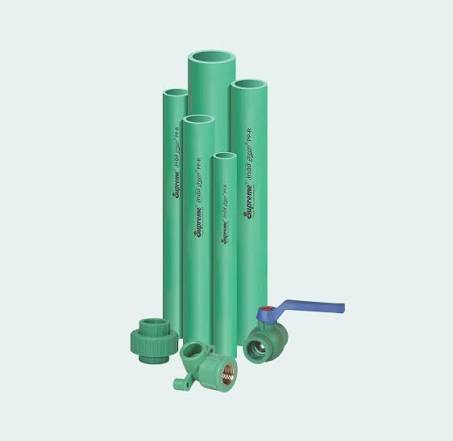
Polypropylene Random Copolymer (PPR-C Type 3) pipes and fittings in Jorhat for hot and cold water installations, chemical lines, and compressor systems. Molecular fusion welding ensures 100% zero-leak jointing with rated temperature up to 95°C.
✓ 100% Leak-Proof Fusion Weld
Polyfusion jointing melts pipe and fitting into a single continuous piece, eliminating joint failures and leak points.
✓ Low Thermal Conductivity
PPR has 1/200th the thermal conductivity of steel, keeping water hotter with reduced pipe insulation requirements.
✓ Scale & Abrasion Resistance
Smooth interior prevents mineral scale deposits even in hard, iron-rich water common in Upper Assam.
✓ Acoustic Damping
High sound damping properties absorb water hammer shockwaves and fluid velocity noise.

Supreme PPR-C Hot & Cold Water Piping Systems
Engineered from imported European PP-R Type 3 polymer. Safe for potable water and resistant to chemical leaching, making it the premier choice for luxury bungalows, hospitals, hotels, and laboratories in Assam.
Complete Range of PPR Brass-Threaded Transition Fittings
Seamlessly connect PPR pipelines to existing GI lines, CP taps, water meters, and solar heaters. Our brass transition fittings feature machined DZR brass inserts bonded permanently into PPR bodies.
Frequently Asked Questions
What is the difference between PPR and CPVC?
PPR pipes use fusion welding for leak-proof joints and can handle higher temperatures. CPVC uses solvent cement and is more rigid. PPR is generally preferred for hot water systems.
Is PPR good for hot water?
Yes, PPR pipes are excellent for hot water applications. They can withstand temperatures up to 95C and maintain their structural integrity.
What is the lifespan of PPR pipes?
PPR pipes have a lifespan of 50+ years under normal operating conditions. They are corrosion-proof, chemical resistant and do not scale.

You May Also Like
Explore more from our product range